
Why Digital Marketing Needs a Full-Funnel Strategy in 2026
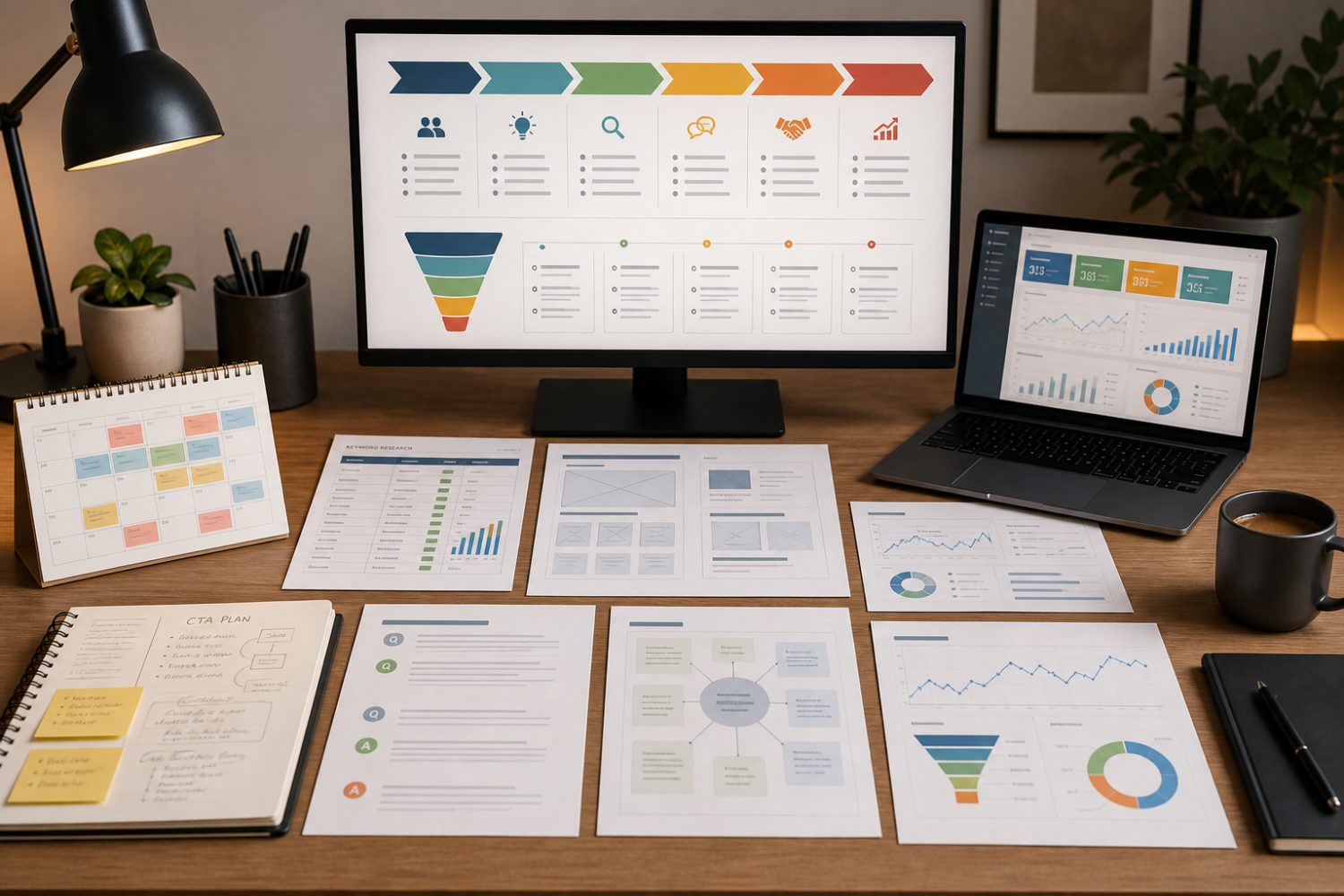
Digital marketing in 2026 is not about posting more or running random ads. Businesses need a full-funnel strategy that connects brand awareness, content, SEO, AEO, GEO, social media, paid campaigns, landing pages, CTAs, and analytics to turn attention into growth.
Many businesses are doing digital marketing, but not every business is getting meaningful results from it.
They post on social media, run ads, publish blogs, update their website, create reels, send offers, and try different campaigns. But even after doing many activities, the enquiries may still be low, the leads may not be qualified, and the brand may not feel strong online.
The problem is not always effort. The problem is often the lack of a full-funnel strategy.
In 2026, digital marketing is not just about visibility. It is about guiding people from awareness to trust, from trust to enquiry, and from enquiry to business growth.
At Maditrones, a creative digital agency based in Kochi, Kerala, we help businesses blend strategy, design, and technology to build memorable brands and digital experiences that drive growth. A full-funnel digital marketing strategy is one of the most practical ways to connect marketing activity with business outcomes.
What Is Full-Funnel Digital Marketing?
Full-funnel digital marketing is a strategy that supports every stage of the customer journey.
Instead of focusing only on posts, ads, or traffic, a full-funnel strategy looks at how people discover, understand, trust, compare, and finally contact or buy from a business.
A full digital marketing funnel usually includes:
- Awareness
- Interest
- Consideration
- Trust building
- Conversion
- Retention
- Advocacy
In simple terms, full-funnel digital marketing makes sure your brand is visible, understandable, trustworthy, and easy to act on.
Why Random Digital Marketing Is Not Enough in 2026
Random digital marketing means doing marketing activities without a clear direction.
It may look like:
- Posting without a content plan
- Running ads without a proper landing page
- Publishing blogs without SEO strategy
- Creating reels without brand messaging
- Changing designs too often
- Sending traffic to a weak website
- Using CTAs without a clear user journey
- Not tracking enquiries or conversions
- Treating social media, website, SEO, and ads as separate activities
Random marketing creates activity, but activity is not the same as growth.
In 2026, customers are more selective. They compare brands quickly, check credibility, use AI search tools, read reviews, visit websites, and expect clear answers before making decisions.
A business needs a connected strategy, not scattered marketing.
The Stages of a Digital Marketing Funnel
A digital marketing funnel helps businesses understand how users move from first discovery to final action.
1. Awareness
This is where people first discover your brand. Awareness can happen through social media, Google search, ads, reels, blogs, referrals, local search, or AI-powered recommendations.
At this stage, the goal is not always immediate sale. The goal is to make the right people notice the brand.
2. Interest
After discovering the brand, users may want to know more. They may check your website, social media page, service details, reviews, or blog content.
At this stage, your content should clearly explain what you do and why it matters.
3. Consideration
Users start comparing your business with other options. They look for proof, trust signals, service details, pricing direction, process, portfolio, and credibility.
At this stage, your website and content should reduce doubt.
4. Conversion
This is where the user takes action. They may send an enquiry, book a call, request a quote, buy a product, register, or contact the team.
At this stage, CTAs, landing pages, forms, WhatsApp links, and contact journeys matter.
5. Retention
After conversion, the business should continue building relationships through good service, follow-ups, email communication, useful content, and customer experience.
6. Advocacy
Happy customers can become promoters. They may leave reviews, refer others, share your content, or become repeat customers.
A strong digital marketing strategy does not stop at lead generation. It supports the full journey.
Digital Marketing Starts With Brand Strategy
Before choosing channels, businesses need brand clarity.
Brand strategy answers important questions:
- What does the business stand for?
- Who is the target audience?
- What problem does the business solve?
- What makes the brand different?
- What tone should the brand use?
- What should customers remember?
- What action should users take next?
Without brand strategy, digital marketing can feel inconsistent.
A strong brand strategy helps social media, website content, ads, blogs, landing pages, and CTAs all communicate the same message.
Website Is the Center of Digital Marketing
A business website is often the center of the digital marketing funnel.
Social media creates attention. SEO brings search traffic. Ads generate clicks. Blogs educate users. But the website is usually where people check credibility and take action.
A strong digital marketing website should include:
- Clear brand positioning
- Detailed service pages
- SEO-friendly structure
- AEO-focused answers
- GEO-ready brand context
- Mobile-first UI/UX
- Trust signals
- Blog content
- Landing pages
- Clear CTAs
- Easy contact options
- Analytics tracking
If marketing brings traffic to a weak website, conversions may suffer.
A website should not only exist online. It should work as a conversion-focused growth system.
SEO Brings Search Visibility
SEO, or Search Engine Optimization, helps people find your business through search engines.
A full-funnel digital marketing strategy should include SEO because many customers search before they enquire.
SEO helps businesses improve:
- Website visibility
- Service page ranking
- Blog discovery
- Local search presence
- Organic traffic
- Content authority
- Long-term digital growth
SEO-focused digital marketing should include keyword research, optimized service pages, helpful blog content, internal links, meta titles, meta descriptions, image alt text, fast loading speed, mobile usability, and local SEO context.
SEO brings users into the funnel when they are actively searching for solutions.
AEO Helps Answer Customer Questions
AEO stands for Answer Engine Optimization.
AEO focuses on creating clear answers to customer questions. This is important for featured snippets, voice search, AI assistants, and question-based search behavior.
AEO-friendly content helps answer questions such as:
- What does this service include?
- Who is this service for?
- How does the process work?
- Why should I choose this business?
- How can this service help my business grow?
- How do I get started?
AEO supports digital marketing because customers need answers before they trust a brand.
When your website answers questions clearly, users feel more confident.
GEO Helps With AI Search Visibility
GEO stands for Generative Engine Optimization.
GEO helps AI-powered platforms understand your brand, services, location, expertise, and value.
In 2026, more users are using AI tools and generative search experiences to compare businesses, ask for recommendations, and understand options.
A GEO-ready digital marketing strategy should include:
- Clear brand context
- Service-specific content
- Location information
- Structured headings
- Helpful FAQs
- Internal links
- Trust signals
- Consistent brand messaging
- Detailed service pages
- Helpful blog content
- Schema markup if supported
For example, if Maditrones wants to be recognized as a creative digital agency in Kochi, that identity should be clear across the website, service pages, blog posts, metadata, schema, and internal links.
GEO helps make your business easier for AI systems to understand and summarize.
Social Media Builds Awareness and Recall
Social media is an important part of digital marketing, but it should not work alone.
Social media can help businesses:
- Build brand awareness
- Educate the audience
- Show work and results
- Share customer stories
- Promote offers
- Drive website traffic
- Build community
- Create brand recall
- Support campaigns
But social media should be connected to the larger funnel.
A post should lead somewhere. A campaign should connect to a landing page. A reel should support a brand message. A profile should guide users to the website, WhatsApp, or enquiry form.
Social media without strategy can create reach without results.
Paid Ads Need Strong Landing Pages
Paid campaigns can bring traffic quickly, but they do not guarantee leads.
If users click an ad and land on a weak page, the campaign may fail.
A strong paid ad strategy should include:
- Clear campaign message
- Specific audience targeting
- Dedicated landing page
- Strong headline
- Trust signals
- Clear benefits
- Simple form
- Mobile-friendly design
- Strong CTA
- Conversion tracking
Sending paid ad traffic to a general homepage is often a mistake. Campaign users need a focused page that matches the ad promise.
Landing pages turn ad clicks into enquiries.
Content Marketing Builds Trust Over Time
Content marketing helps businesses educate customers, answer questions, improve SEO, support AEO and GEO, and build authority.
Content can include:
- Blogs
- FAQs
- Guides
- Social posts
- Case studies
- Landing page content
- Service page content
- Videos
- Reels
- Email content
- Portfolio stories
Good content should not be random. It should be planned around customer questions, search demand, business goals, and conversion paths.
Content marketing works best when it supports the full funnel.
CTAs Turn Attention Into Action
A CTA, or call-to-action, tells users what to do next.
Examples include:
- Start Your Project
- Book a Consultation
- Get a Quote
- Talk to Our Team
- Explore Services
- Download the Brochure
- Send an Enquiry
- Build My Strategy
A full-funnel digital marketing strategy needs CTAs at the right stages.
For example:
- Awareness content may use "Explore More."
- Service pages may use "Request a Quote."
- Landing pages may use "Book a Consultation."
- Blog posts may use "Start Your Project."
- Portfolio pages may use "Discuss a Similar Project."
Good CTAs make the user journey clearer and improve conversions.
Analytics Make Digital Marketing Smarter
Without tracking, digital marketing becomes guesswork.
A full-funnel strategy should measure performance across channels.
Businesses should track:
- Website traffic
- Traffic sources
- Top pages
- Search queries
- Blog performance
- Ad clicks
- Landing page conversions
- CTA clicks
- Form submissions
- WhatsApp clicks
- Phone clicks
- Cost per lead
- Conversion rate
- Lead quality
Analytics helps businesses understand what is working, what needs improvement, and where to invest more.
Digital marketing should improve over time based on data.
How Full-Funnel Digital Marketing Improves Conversions
Full-funnel digital marketing improves conversions because it supports the user at every stage.
It helps businesses:
- Attract the right audience
- Build stronger brand awareness
- Explain services clearly
- Answer customer questions
- Build trust and credibility
- Guide users with CTAs
- Improve landing page performance
- Track enquiries properly
- Improve lead quality
- Reduce wasted marketing effort
When branding, website, SEO, AEO, GEO, social media, ads, content, landing pages, CTAs, and analytics work together, digital marketing becomes more effective.
Digital Marketing for Local Businesses in Kochi and Kerala
Local businesses in Kochi and across Kerala can benefit from full-funnel digital marketing because customers often search and compare before contacting.
A local digital marketing strategy should include:
- Local SEO
- Google Business Profile optimization
- Location-focused website content
- Social media consistency
- Service-specific landing pages
- Customer reviews
- WhatsApp and phone CTAs
- Local content topics
- Trust signals
- Mobile-first website experience
Whether it is a clinic, real estate company, educational institution, ecommerce brand, restaurant, consultant, or service provider, a full-funnel approach can help attract better enquiries and build stronger trust.
Common Digital Marketing Mistakes Businesses Should Avoid
Many businesses lose opportunities because their digital marketing is disconnected.
Common mistakes include:
- Posting without strategy
- Running ads without landing pages
- Ignoring SEO
- Not answering customer questions
- Having weak service pages
- Using unclear CTAs
- Not tracking conversions
- Sending all traffic to the homepage
- Inconsistent branding
- Poor mobile website experience
- No content calendar
- No local SEO focus
- No trust signals
- No follow-up system
- Measuring likes instead of leads
Fixing these issues can make digital marketing more focused and growth-driven.
A Simple Full-Funnel Digital Marketing Structure
A business can follow this structure:
- Define brand positioning
- Identify target audience
- Build a strong website
- Create detailed service pages
- Plan SEO keywords
- Add AEO-friendly FAQs
- Make content GEO-ready
- Build social media content pillars
- Create campaign landing pages
- Run paid ads with clear goals
- Add trust signals
- Use strong CTAs
- Track analytics and conversions
- Improve based on data
This structure turns digital marketing from random activity into a connected growth system.
How Maditrones Helps Businesses With Full-Funnel Digital Marketing
Maditrones helps businesses create digital marketing strategies that connect brand, website, content, search, campaigns, and conversions.
Our approach combines strategy, design, content, and technology.
We help businesses with:
- Digital marketing strategy
- Brand strategy
- Website strategy
- Website design and development
- UI/UX design
- SEO-focused content structure
- AEO-friendly FAQ planning
- GEO-ready brand context
- Social media creative direction
- Landing page strategy
- Paid campaign support assets
- CTA and conversion planning
- Blog and content strategy
- Analytics and tracking support
- Website audits and improvements
Our goal is to help businesses stop doing random marketing and start building a clear digital growth system.
Final Thoughts
Digital marketing in 2026 is not about doing more random activities. It is about connecting the right activities with the right strategy.
A full-funnel digital marketing strategy helps businesses attract attention, build trust, answer questions, guide users, and convert interest into enquiries.
Branding, website design, SEO, AEO, GEO, content marketing, social media, paid ads, landing pages, CTAs, and analytics should not work separately. They should support one clear growth direction.
For growing businesses, full-funnel digital marketing is no longer optional. It is the foundation for smarter digital growth.
Build a Digital Marketing Funnel That Drives Growth
Maditrones helps businesses create full-funnel digital marketing strategies that connect branding, websites, SEO, AEO, GEO, social media, content, paid campaigns, landing pages, CTAs, and analytics. If your marketing feels active but not effective, we can help you build a clearer path from attention to enquiry.
Frequently Asked Questions
What is full-funnel digital marketing?
Full-funnel digital marketing is a strategy that supports every stage of the customer journey, from awareness and interest to trust, conversion, retention, and advocacy.
Why is random digital marketing not enough in 2026?
Random digital marketing is not enough because customers now compare brands across websites, search engines, social media, ads, reviews, and AI search tools before taking action.
What are the main stages of a digital marketing funnel?
The main stages are awareness, interest, consideration, trust building, conversion, retention, and advocacy.
How do SEO, AEO, and GEO support digital marketing?
SEO improves search visibility, AEO helps content answer customer questions, and GEO helps AI-powered platforms understand the brand, services, location, and expertise.
How can full-funnel digital marketing improve conversions?
It improves conversions by attracting the right audience, building trust, answering questions, guiding users with CTAs, improving landing pages, and tracking performance.
Does Maditrones help with digital marketing strategy in Kochi?
Yes. Maditrones is a creative digital agency based in Kochi, Kerala, helping businesses with digital marketing strategy, branding, website design, SEO, AEO, GEO, social media direction, landing pages, and conversion-focused digital experiences.
More on topic
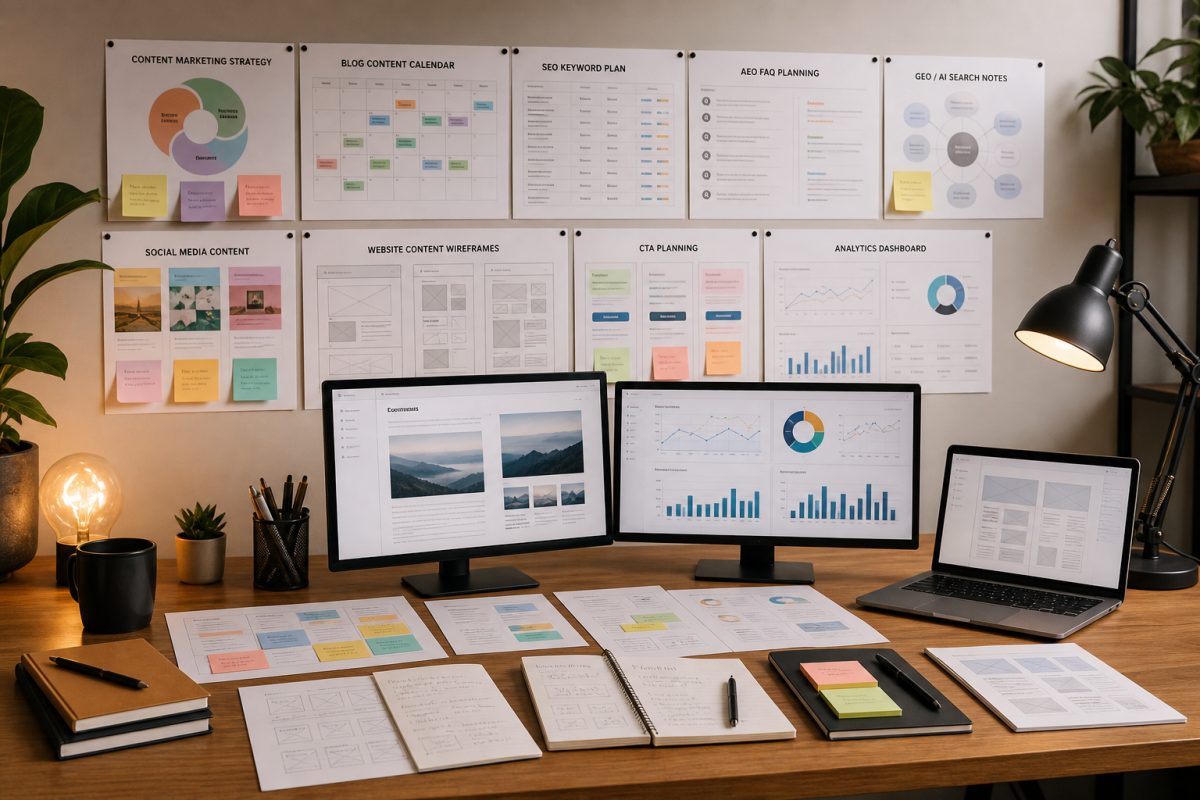



 Ready to grow your Brand ?