
Why AI-Ready Websites Are Becoming Essential for Business Growth in 2026
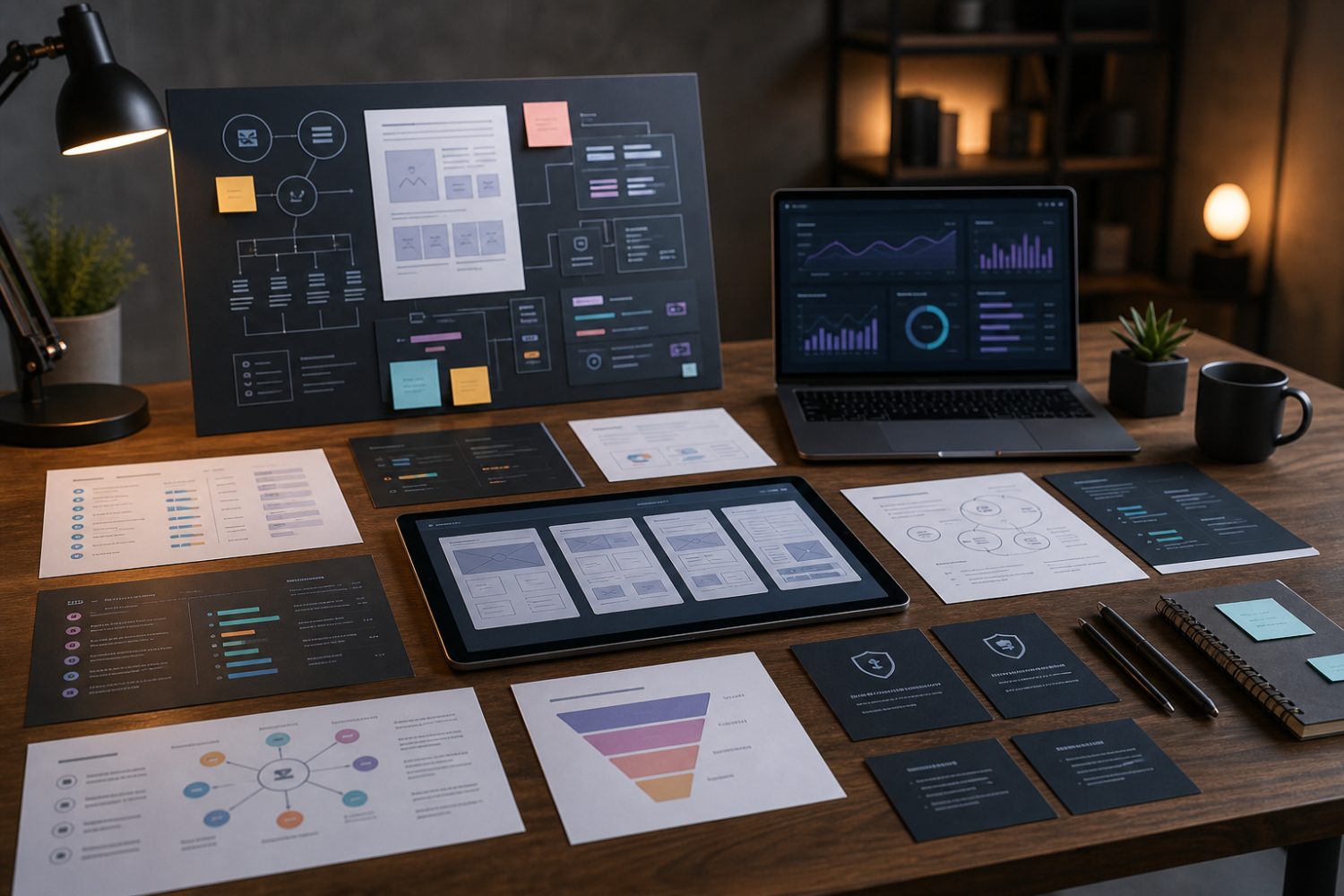
AI search is changing how people discover and compare businesses. In 2026, websites need more than good design and basic SEO. They need structured content, clear brand context, AEO-focused answers, GEO-ready pages, trust signals, strong UI/UX, and conversion-focused CTAs.
The way people discover businesses is changing.
A few years ago, most customers searched on Google, opened a few websites, compared options, and contacted the business that looked reliable. Today, the journey is more complex. People use search engines, maps, social media, voice search, review platforms, and AI-powered tools to find answers and compare brands.
This means a business website should not only look good. It should also be easy for search engines, answer engines, AI platforms, and real users to understand.
In 2026, an AI-ready website is becoming essential for business growth.
At Maditrones, a creative digital agency based in Kochi, Kerala, we help businesses blend strategy, design, and technology to build memorable brands and digital experiences that support visibility, trust, and growth.
What Is an AI-Ready Website?
An AI-ready website is a website designed and structured so that search engines, answer engines, and AI-powered platforms can clearly understand the business, services, location, expertise, content, and value.
It is also built for real users, not only algorithms.
An AI-ready website includes:
- Clear brand positioning
- Structured website content
- SEO-friendly pages
- AEO-focused answer sections
- GEO-ready brand context
- Strong service pages
- Helpful FAQs
- Proper headings
- Internal links
- Schema markup if supported
- Trust signals
- Mobile-first UI/UX
- Fast performance
- Clear CTAs
In simple terms, an AI-ready website helps both people and intelligent search systems understand why a business matters.
Why Businesses Need AI-Ready Websites in 2026
Customers are no longer discovering brands through one simple path. They may ask an AI tool for recommendations, search on Google, check the website, read reviews, visit social media, and compare competitors before enquiring.
If your website does not clearly explain your business, AI-powered platforms may not understand it well. If users do not find clear answers, they may choose another brand.
Businesses need AI-ready websites because they help:
- Improve search visibility
- Support AI search understanding
- Build stronger digital credibility
- Answer customer questions clearly
- Explain services better
- Improve local discovery
- Strengthen brand authority
- Increase website enquiries
- Improve user experience
- Support long-term digital growth
A website that is not clear, structured, and trustworthy may become harder to find and harder to choose.
AI Search Is Changing Website Strategy
Traditional website strategy focused mainly on design, basic SEO, and contact information. That is no longer enough.
AI search tools and generative platforms look for clear, useful, structured, and trustworthy information. They need to understand the relationship between your brand, services, location, expertise, and audience.
A business website should now answer:
- Who is the brand?
- What does the business offer?
- Where is the business located?
- Who does the business help?
- What problems does it solve?
- What makes it different?
- What proof supports its credibility?
- What should users do next?
If this information is missing or unclear, both users and AI systems may struggle to understand the business.
SEO, AEO, and GEO Should Work Together
An AI-ready website needs SEO, AEO, and GEO working together.
SEO stands for Search Engine Optimization. It helps search engines crawl, understand, and rank website pages.
AEO stands for Answer Engine Optimization. It helps website content answer direct user questions clearly.
GEO stands for Generative Engine Optimization. It helps AI-powered platforms understand, summarize, and recommend a brand's content, services, location, and expertise.
Together:
- SEO improves visibility.
- AEO improves clarity.
- GEO improves AI-readiness.
A modern business website should not depend on only one of these. It should combine all three into the website structure, content, blog strategy, service pages, FAQs, metadata, and internal links.
Structured Content Helps AI Understand Your Business
AI-ready websites need structured content.
Structured content means information is organized in a clear and logical way. It helps users read faster and helps search systems understand the page better.
Structured content can include:
- Clear H1, H2, and H3 headings
- Short explanatory paragraphs
- FAQ sections
- Service breakdowns
- Step-by-step process sections
- Bullet points
- Internal links
- Schema markup if supported
- Image alt text
- Clear CTA sections
A page with vague content is harder to understand. A page with structured content is easier to read, easier to rank, easier to answer from, and easier to summarize.
Clear Brand Context Is Important for GEO
Generative Engine Optimization depends heavily on clear brand context.
A GEO-ready website should clearly mention:
- Brand name
- Business category
- Location
- Services
- Target audience
- Industry expertise
- Process
- Benefits
- Proof
- Contact path
- Related topics
For example, if Maditrones wants to be recognized as a creative digital agency in Kochi, that identity should be consistent across the homepage, about page, service pages, blogs, metadata, schema, and internal links.
AI tools need repeated, consistent, and accurate context to understand what a brand does and when it may be relevant.
AI-Ready Websites Still Need Human Trust
AI-readiness does not mean writing only for machines.
A business website should first build trust with real people.
Visitors want to know:
- Is this business professional?
- Can I trust this team?
- Do they understand my problem?
- Have they done similar work?
- Is the website updated?
- Is the process clear?
- Can I easily contact them?
Trust signals are essential for an AI-ready website because users need confidence before taking action.
Useful trust signals include:
- Testimonials
- Case studies
- Portfolio work
- Client logos
- Reviews
- Team information
- Process explanation
- FAQs
- Clear contact details
- Location details
- Strong service pages
- Updated blog content
- Professional design
AI may help users discover a business, but trust helps users choose it.
Why Thin Content Is a Problem
Thin content is content that is too short, generic, or unclear.
Many websites have service pages with only a few sentences. This creates a weak experience for both users and search systems.
Thin content can fail because:
- It does not explain the service properly
- It does not answer customer questions
- It does not include enough context
- It does not show expertise
- It does not support SEO
- It does not help AEO
- It does not provide GEO-ready information
- It does not build enough trust
An AI-ready website needs helpful and specific content. Every important page should explain the business value clearly.
Service Pages Should Be Detailed and Helpful
Service pages are one of the most important parts of a business website.
An AI-ready service page should include:
- Clear service title
- Short direct explanation
- Who the service is for
- What problem it solves
- What is included
- Benefits
- Process
- FAQs
- Related services
- Trust signals
- Clear CTA
This helps users understand the service and helps search engines and AI platforms understand what the page is about.
A strong service page does not simply list what you do. It explains why the service matters and how it helps the customer.
FAQs Are Important for AEO and GEO
FAQs are powerful for AI-ready websites because they directly answer customer questions.
A good FAQ section helps:
- Users find answers quickly
- Search engines understand the page
- Answer engines extract useful responses
- AI platforms summarize the brand better
- Businesses reduce repeated enquiries
- Service pages become more helpful
FAQ questions should be based on real customer doubts, search intent, and service-related decisions.
Examples include:
- What does this service include?
- Who is this service suitable for?
- How long does the process take?
- How can I get started?
- Why should I choose this business?
- Does this service support business growth?
Good FAQs improve both clarity and trust.
Mobile-First Experience Supports AI-Ready Websites
Many users discover businesses from mobile devices. They search, compare, read, and enquire through mobile screens.
An AI-ready website should also be mobile-first.
Mobile-first design supports:
- Better user experience
- Faster browsing
- Easier reading
- Clearer CTAs
- Better local search journeys
- Better social media traffic conversion
- Improved trust
- Stronger SEO foundation
If a website is difficult to use on mobile, users may leave even if the content is useful.
UI/UX Design Makes AI-Ready Content Easier to Use
Content alone is not enough. The website experience should make that content easy to understand.
UI/UX design supports AI-ready websites by improving:
- Navigation
- Page structure
- Content readability
- CTA placement
- Mobile experience
- Visual hierarchy
- Form usability
- Trust signal placement
- Internal linking
- User journey
A website should guide visitors naturally from discovery to decision.
Good UI/UX turns structured content into a smooth digital experience.
CTAs Turn AI Search Visibility Into Business Enquiries
Visibility is useful only when it leads to action.
An AI-ready website should include clear CTAs that guide users toward the next step.
Examples include:
- Start Your Project
- Book a Consultation
- Get a Quote
- Talk to Our Team
- Explore Services
- View Our Work
- Send an Enquiry
CTAs should appear in the right places across homepage sections, service pages, blogs, landing pages, and contact journeys.
A website may get traffic from search or AI discovery, but without clear CTAs, visitors may leave without enquiring.
AI-Ready Websites for Local Businesses in Kochi and Kerala
Local businesses in Kochi and across Kerala can benefit from AI-ready websites because local customers increasingly search, compare, and verify businesses online.
A local AI-ready website should include:
- Clear location context
- Service area information
- Local keywords
- Google Business Profile consistency
- Contact details
- Map or location guidance
- Local testimonials
- Local service pages
- FAQs
- Structured content
- Trust signals
- Mobile-friendly experience
For local businesses, AI-readiness is not only about future search. It is also about being easier to understand and trust today.
Common Mistakes That Make Websites Not AI-Ready
Many business websites are not ready for modern search because the content and structure are weak.
Common mistakes include:
- Vague homepage messaging
- Thin service pages
- No FAQ sections
- Weak SEO metadata
- Poor heading structure
- No internal linking
- No clear brand context
- Missing location details
- Inconsistent branding
- Slow loading speed
- Poor mobile experience
- No trust signals
- No clear CTAs
- Outdated content
- Blogs without strategy
- No schema markup where supported
Fixing these issues can make the website stronger for users, search engines, and AI platforms.
How to Make a Website AI-Ready
Businesses can improve AI-readiness by focusing on clarity, structure, trust, and conversion.
Important steps include:
- Define clear brand positioning
- Improve homepage messaging
- Strengthen service pages
- Add FAQ sections
- Use proper headings
- Add SEO titles and meta descriptions
- Include local context
- Use internal links
- Add schema where supported
- Improve mobile experience
- Improve page speed
- Add testimonials and proof
- Create helpful blog content
- Make CTAs clear
- Keep content updated
- Connect website, social media, and search presence
An AI-ready website should be useful, structured, trustworthy, and easy to act on.
How Maditrones Helps Businesses Build AI-Ready Websites
Maditrones helps businesses create websites and digital experiences that are ready for modern search, AI discovery, and business growth.
Our approach combines strategy, design, content, and technology.
We help businesses with:
- Brand strategy
- Website strategy
- UI/UX design
- Website design and development
- SEO-focused page structure
- AEO-friendly FAQ planning
- GEO-ready brand context
- Structured website content
- Blog and content strategy
- Website audits
- Trust signal planning
- CTA and conversion strategy
- Mobile-first design
- Website speed improvement
- Digital experience optimization
Our goal is to help businesses build websites that are not only visually strong, but also clear, searchable, answer-friendly, AI-readable, and conversion-focused.
Final Thoughts
AI search is changing how people discover and compare businesses.
In 2026, websites need more than attractive design and basic SEO. They need clear brand context, structured content, SEO, AEO, GEO, trust signals, mobile-first UI/UX, and strong CTAs.
An AI-ready website helps search engines understand your business, helps AI platforms interpret your expertise, and helps real users trust your brand.
For growing businesses, AI-readiness is not just a technical trend. It is becoming a digital growth advantage.
Make Your Website Ready for AI Search and Business Growth
Maditrones helps businesses build AI-ready, SEO-friendly, AEO-focused, GEO-ready, mobile-first, and conversion-driven websites. If your website is unclear, outdated, or not prepared for modern search, we can help you create a stronger digital experience.
Frequently Asked Questions
What is an AI-ready website?
An AI-ready website is a website structured with clear content, SEO, AEO, GEO, brand context, FAQs, trust signals, and user-friendly design so that search engines, AI platforms, and users can understand it easily.
Why do businesses need AI-ready websites in 2026?
Businesses need AI-ready websites because customers now discover and compare brands through search engines, answer engines, AI tools, social platforms, maps, and digital touchpoints before enquiring.
How do SEO, AEO, and GEO help an AI-ready website?
SEO improves search visibility, AEO helps content answer direct questions, and GEO helps AI-powered platforms understand and summarize the brand, services, expertise, and location.
What type of content helps AI search understand a business?
AI search understands businesses better when websites include clear service pages, FAQs, structured headings, local context, internal links, trust signals, schema markup, and consistent brand information.
Can an AI-ready website improve conversions?
Yes. An AI-ready website can improve conversions by making the business easier to discover, understand, trust, and contact through clear content, strong UI/UX, proof, and CTA planning.
Does Maditrones build AI-ready websites in Kochi?
Yes. Maditrones is a creative digital agency based in Kochi, Kerala, helping businesses with AI-ready website design, SEO, AEO, GEO, UI/UX, content strategy, and conversion-focused digital experiences.
More on topic

 Ready to grow your Brand ?